by Dennis P. Carman—President & CEO, United Way of Greater Plymouth County
Now, before you consider not reading this blog post because you worry that it may try to convince you to pursue any particular religious direction, remain calm and read on. Though I do practice a specific religion, my walk of faith over the years has been the result of more stumbling around than anything else. Sometimes, I find myself running away from fanatics who feel they need to convince me that their path is the only path, so I try to avoid “proselytizing” myself. I will, of course, share my faith if you ask me.
I do think that the folks who put together Alcoholics Anonymous so many years ago (1935) did a terrific job of acknowledging that some kind of “spirituality” is important to overcoming addictions without trying to suggest any particular belief system. From A.A. literature, comes the statement, “Many members believe in some sort of god, and we have members who come from and practice all sorts of religions, but many are also atheist or agnostic. It’s important to remember that A.A. is not a religious organization; we have a simple idea that there is a power greater than us as individuals.”
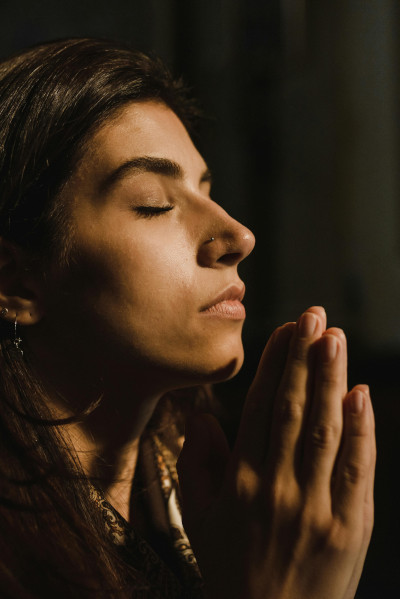
What I did want to pursue in this post is a brief conversation about the power of prayer, regardless of any particular faith perspective. Our world has become more and more complex with new and virulent illnesses and physical and mental maladies that sometimes exceed our medical professionals’ abilities, our sophisticated medicines, and our most advanced medical technologies. Quite honestly, sometimes we need “a power greater than us” to heal.
In the same way that I would not identify myself as any kind of expert in the world of religion, I would also not identify myself as at all knowledgeable in the world of science, though I respect both of these worlds. Professional journals, though, provide a rich source of scientific information. In the Indian Journal of Psychiatry, there is a fascinating article from 2009 Oct-Dec; 51(4): 247–253, entitled, “Prayer and healing: A medical and scientific perspective on randomized controlled trials.” In the article, the authors discuss the many reasons why it is nearly impossible to prove that prayer can lead to positive medical outcomes:
- It could be difficult, if not impossible, to measure all the independent and confounding variables that are important in such research. For example, how might one measure faith, fervency, reasonableness, worthiness, religiosity, morality, and other abstract constructs?
- How might one define what is an acceptable response to prayer? Healing can be partial or complete. It can be psychological or physical. It can be abstract or concrete. Confounding the picture, statistically significant improvement can be identified only if the same outcome measure is improved in a sufficiently large number of experimental relative to control patients, but why should god select any one outcome measure over the rest? And, if different outcome measures improve in different experimental patients in response to prayer, there is no way in which the improvement can be statistically detected.
- As atheists, in general, form a minority in most populations, in any randomized controlled trial of intercessory prayer, there is likely to be a number of persons (friends, relatives, and the patients themselves) praying for members of both experimental and control groups, unknown to the researchers. If prayer works, this unmeasured source of healing could diminish intergroup differences in outcomes.
- Is it valid to assume that acts of god conform to the types of data distributions that form the basis of the statistics we use to determine whether something is effective? Or that god responds mechanistically to prayer in a manner that follows laws of probability? The very definition of miraculous indicates that it falls outside the provisions of nature, and so, divine intervention could actually be expected to violate probability.
- If god decides the worth of individual prayers, then one prayer made by a control patient or relative might statistically offset a multitude of intercessory prayers offered on behalf of the experimental patients. In fact, if divine intervention is selective or arbitrary in response to prayer, the entire basis of randomized controlled design and statistical analysis becomes invalid.

No matter an individual’s faith perspective, these questions make it clear that the intersection of science and prayers is confusing at the very least. Even so, this article is not stating that prayer is not a possible pathway to healing, just that it is very difficult to prove scientifically.
So, with the eternally optimistic hope that prayers may be answered, I offer the following prayer: “To whatever being, entity, divine powers that there may be in our hearts, in our homes, in our neighborhoods, in our world, and in the universe, I pray that you will sharpen the minds of the inventors of all of our medical devices and technologies, that you will guide the hands of our dedicated surgeons and our compassionate nurses, that you will strengthen those who have fallen to illness or injury, physically, intellectually, and emotionally to set them on course for a full, healthful, and lasting recovery!”
 Community Voices for Health