By Tayla Carter, MS, RD, LDN — Registered Dietitian (RD) at the Signature Healthcare Outpatient Nutrition Clinic
Preventing dehydration is an important part of summer safety! Dehydration occurs when you lose more fluids than you take in and your body does not have enough water to function. Water makes up about 60% of body weight and is essential for many body functions, including regulating body temperature, removing waste products from the body, and promoting healthy digestion. We primarily take in water through the fluids and foods we consume, and the most common way in which we lose water is through urine, stool, and sweat. Increased temperatures in the summer often come with increased sweating. It is essential to make sure you replenish fluid loss and take note of signs of dehydration.

What are the signs of dehydration?
- Thirst/dry mouth
- Headache
- Fatigue/weakness
- Dizziness/lightheadedness
- Constipation
- Nausea/vomiting
- Dark-colored urine or low urine output
- Muscle cramps
- Dry skin
How much water do I need?
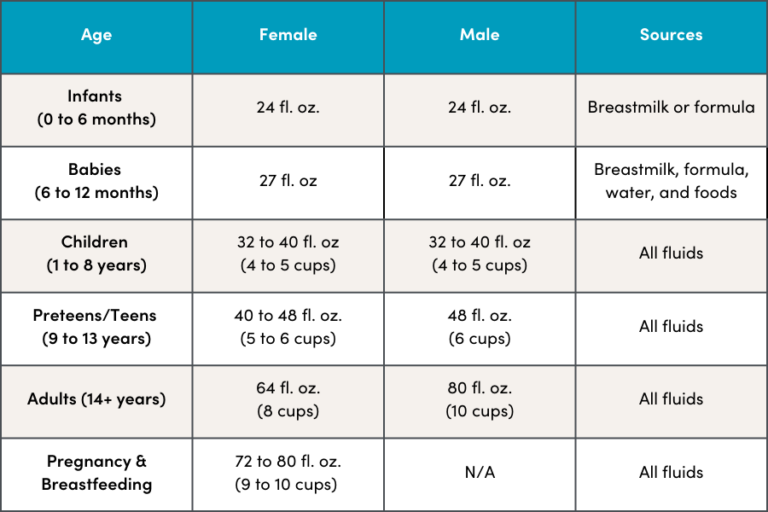
Fluid needs are highly individual and can fluctuate based on varying factors, such as climate, activity levels, certain medical conditions, etc. Keep in mind – more isn’t always better; too much water can also be dangerous as it can lead to overhydration, a rare condition that occurs when there is too much water in the body, which causes dangerous electrolyte imbalances. Most people get enough electrolytes from foods, but athletes or people who sweat a lot may need to supplement with electrolytes, such as sports drinks, electrolyte repletion beverages, or powders that can be added to water (think Gatorade, Pedialytle, Liquid IV, etc.) to prevent overhydration. Below is a chart with some general guidelines, but it is a good idea to speak with your registered dietitian or doctor for more specific guidance on your individual hydration needs!
Tips to help you stay hydrated:

- Keep water with you – bring a water bottle with you to work, school, the gym, and to outdoor activities
- Start early – drink 1 glass of water before you leave the house for the day, start working, etc. to get started off strong with your daily hydration
- Stay ahead of it – don’t wait until the first signs of dehydration (often thirst) to start drinking water; take sips throughout the day to prevent dehydration
- Make it your own – pick up a tumbler with a straw or refillable water bottle that you will be more likely to use, and maybe choose an eye-catching color to help you remember to drink from it
- Add some flavor – make your water more flavorful and interesting by adding slices of citrus or other seasonal fruits and vegetables (watermelon, cucumber, strawberries, etc.), and herbs such as mint or basil; sugar-free flavored water or seltzer are great choices too!
- Eat hydrating foods – fruits and vegetables have high water content and can help you stay hydrated, while also helping you eat more fruits and veggies; try watermelon (it’s in the name!) leafy greens, cucumbers, bell peppers, strawberries, tomatoes, pineapple, and citrus fruits
- If you have trouble remembering to drink water, set alarms on your phone or watch, or get a water bottle with markers to help you stay on track
- Limit excess caffeine and alcohol, as these can be dehydrating
Information sources:
https://diet.mayoclinic.org/us/blog/2022/how-to-stay-hydrated-over-the-summer/
https://health.unl.edu/10-tips-staying-hydrated-summer%C2%A0
https://www.uclahealth.org/news/article/how-to-stay-hydrated-in-the-summer-heat
 Community Voices for Health
One thought on “Tips to Help You Stay Hydrated This Summer”